Terms for Cowboy Gear
|
|
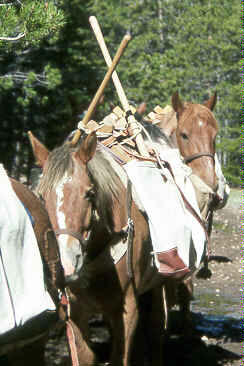
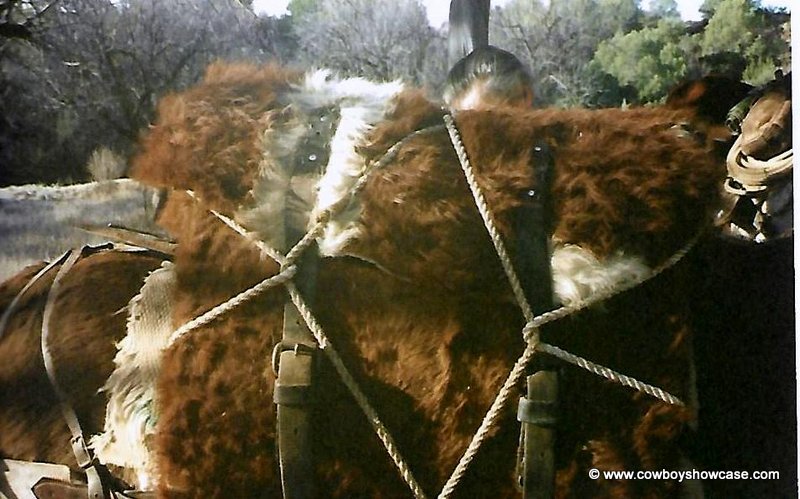
KIAKS: pack boxes made of rawhide laced on wooden frames. The one shown still has hair on the rawhide.
|
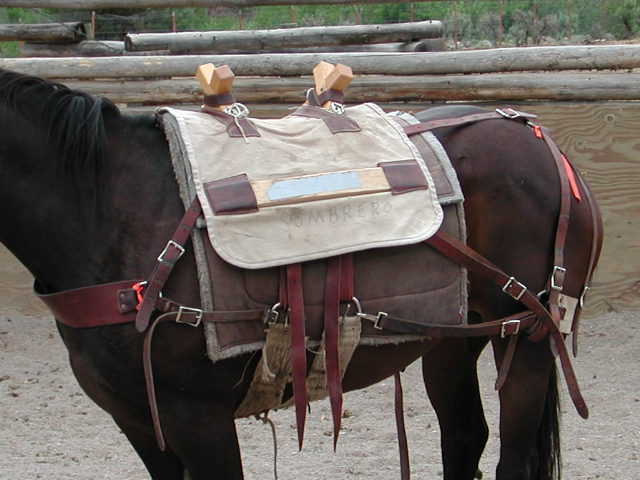
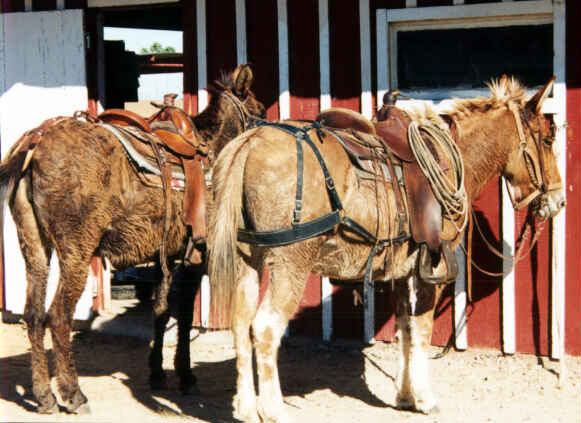
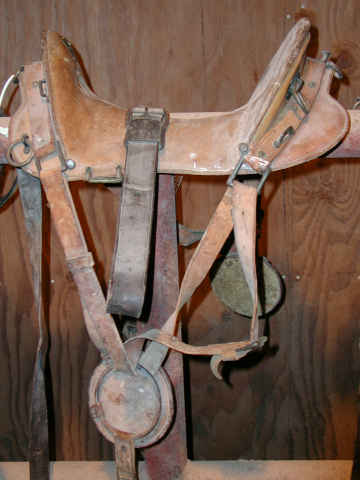
SAWBUCK PACKSADDLE: (la albarda) (juste) simple wooden framework with crossed ends placed on animal's back to carry loads.
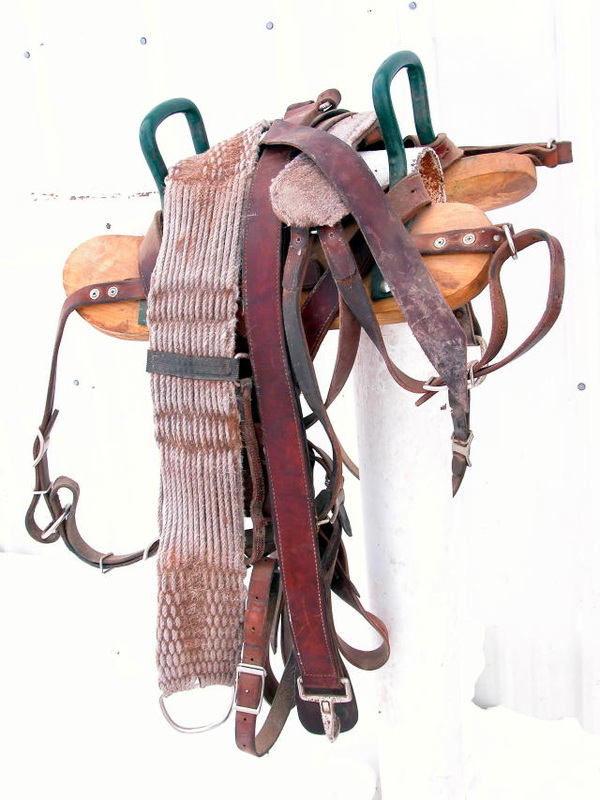
DECKER PACKSADDLE: different style pack saddle with metal rings to support the load. The pack saddle pictured on the left is made by Tom Padgitt, Waco, Texas and has metal arches with "horns" for tying, rather than traditional rings.
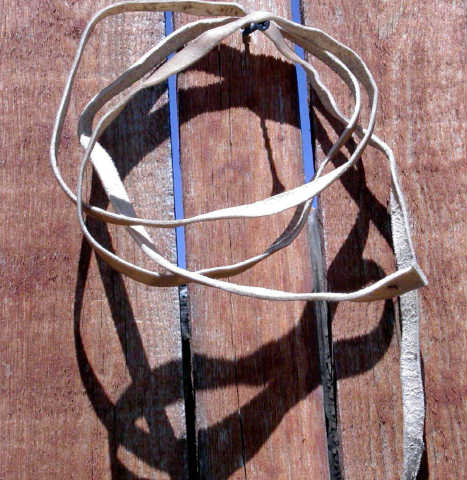
RAWHIDE: The hide of a cow, stretched, dried, and scraped, that can be braided and made into gear such as reins and ropes. Very strong. The cowboy in the photos is cutting strips of rawhide from a big circle of it. The strips then can be braided into gear.
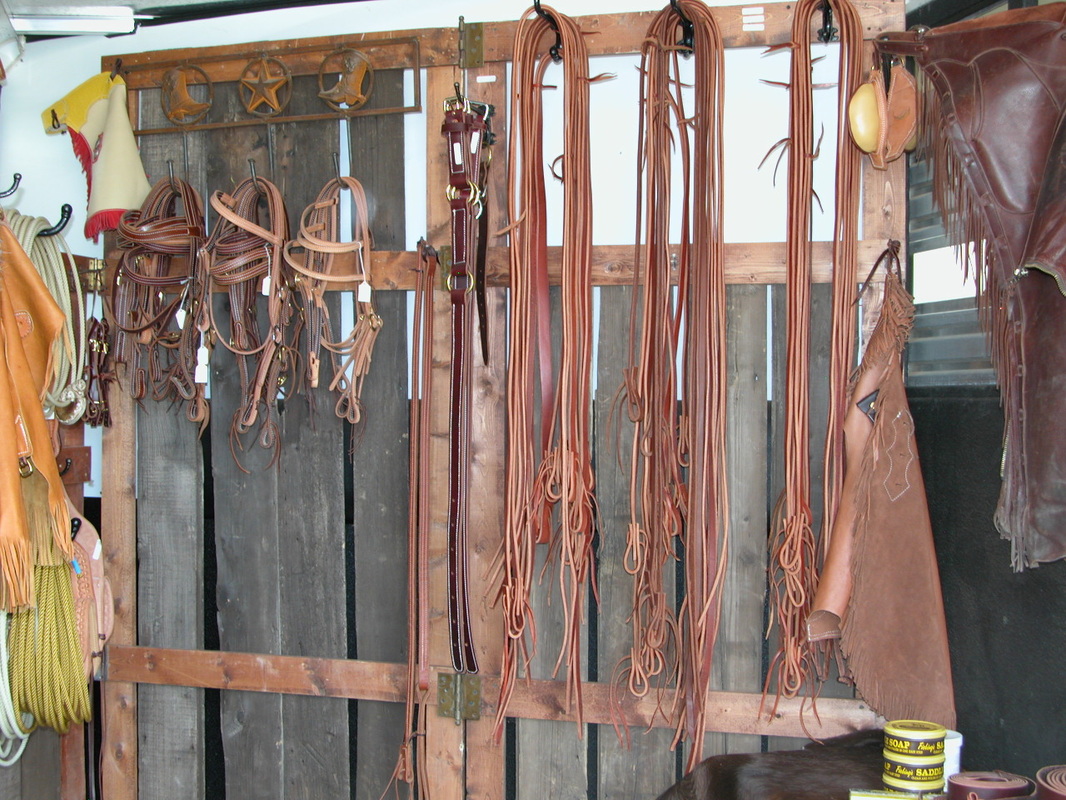
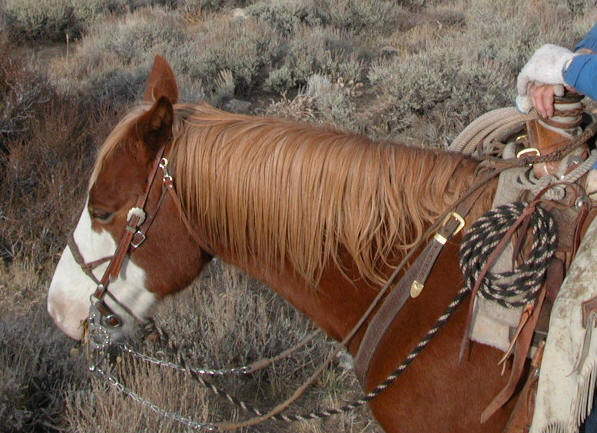
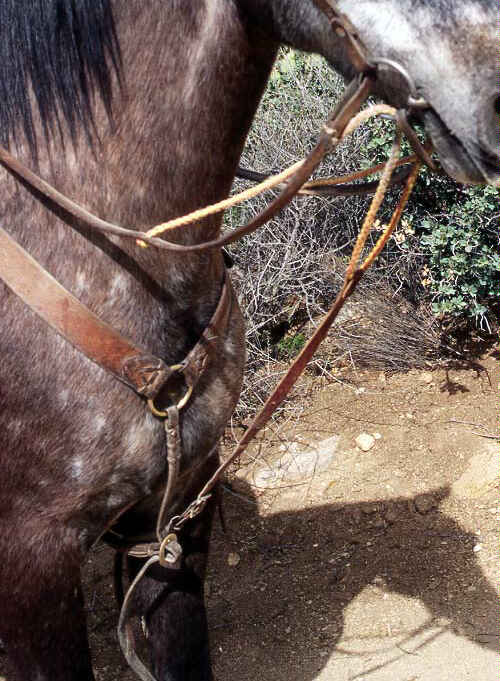
REINS: (las riendas) strap or cord (in pairs) that runs from the bridle bit around the horse's neck, to be held and manipulated by the rider. These straps manipulate the bit and apply pressure on a horses mouth and neck in order to steer the animal.
Reins are of two general types, open (split) and closed. Texas cowboys prefer open reins. One advantage of that type is that they are not joined together, so that if a rider is thrown, he is not in danger of becoming entangled. Ropers and buckaroos are partial to closed reins. Closed reins are attached to each other
Reins are of two general types, open (split) and closed. Texas cowboys prefer open reins. One advantage of that type is that they are not joined together, so that if a rider is thrown, he is not in danger of becoming entangled. Ropers and buckaroos are partial to closed reins. Closed reins are attached to each other
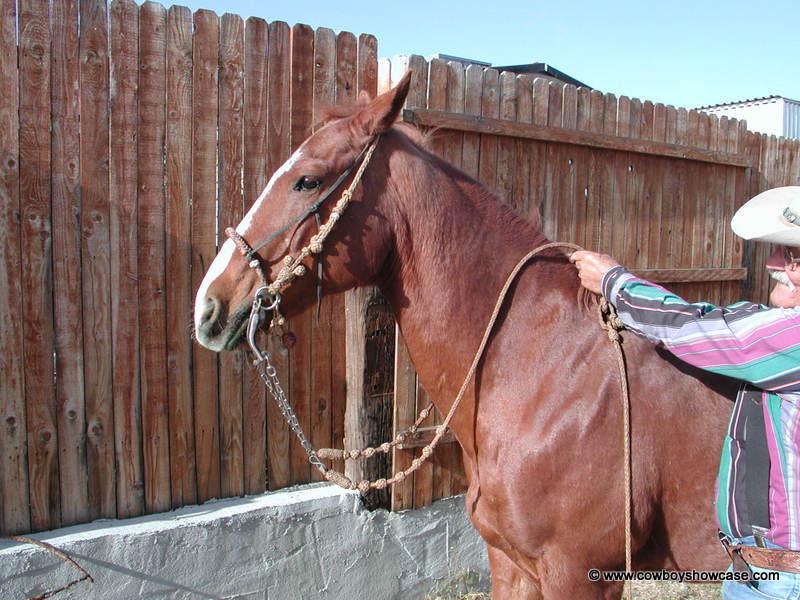
California style reins often have a long flexible quirt called a "romal" attached.
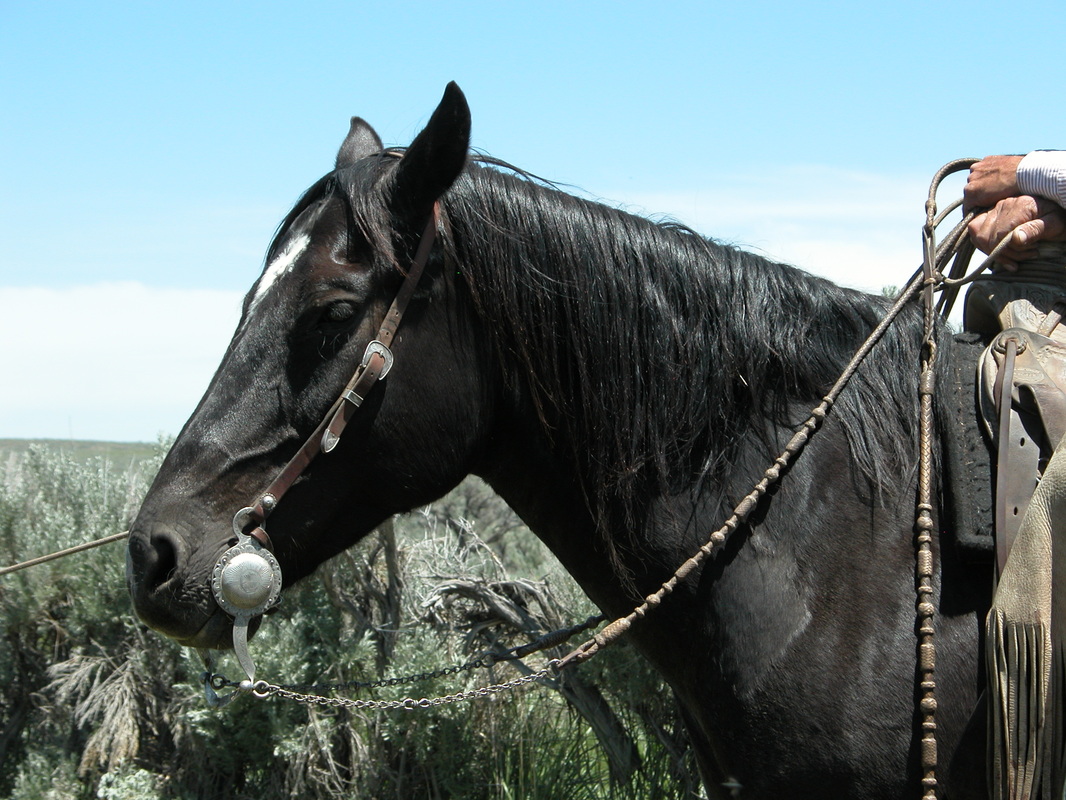
ROMAL: a quirt or whip attached to a set of California style reins.
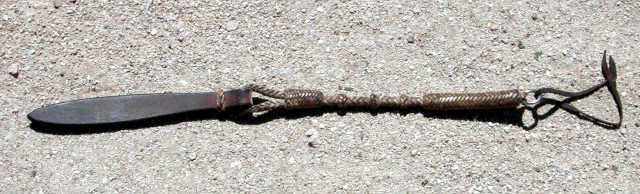
Quirt - Hand whip
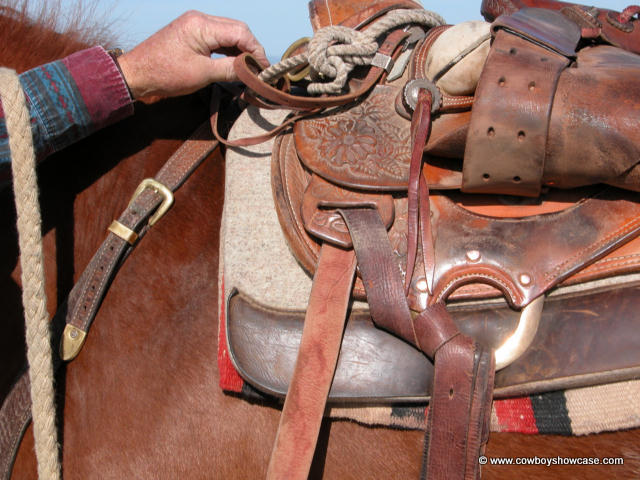
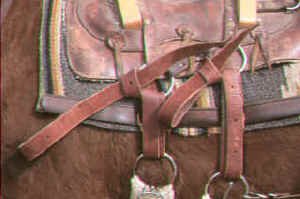
RIGGING RING: (la argolla) latigo ring.
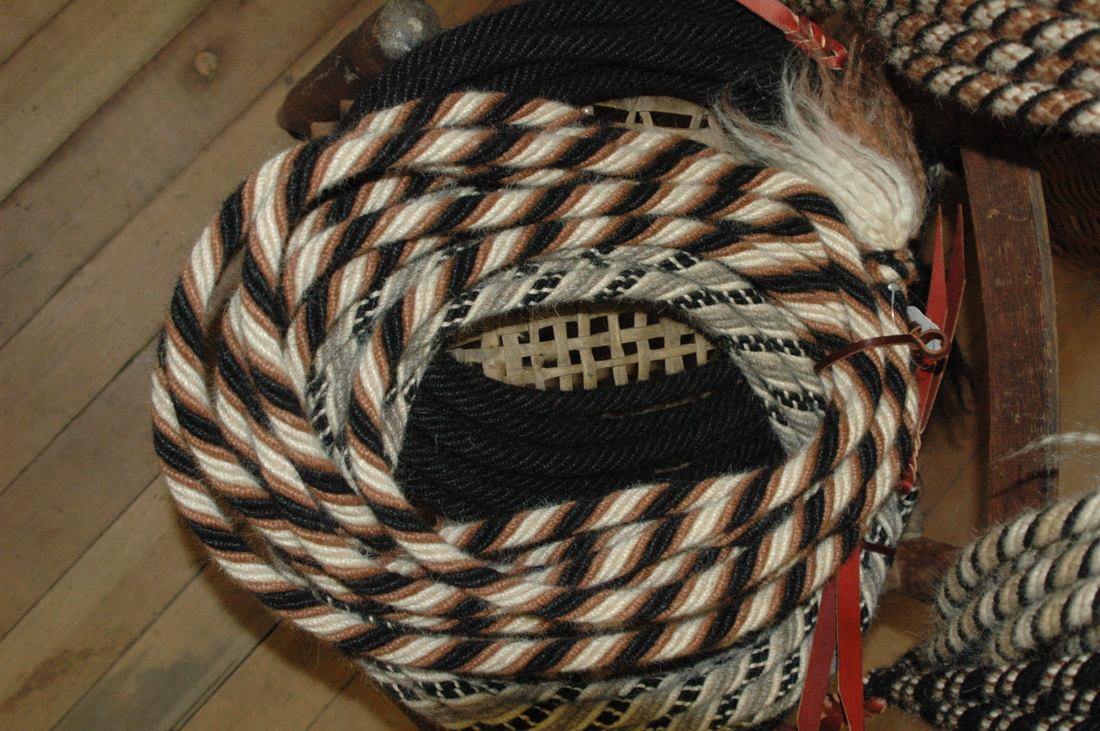
ROPES:
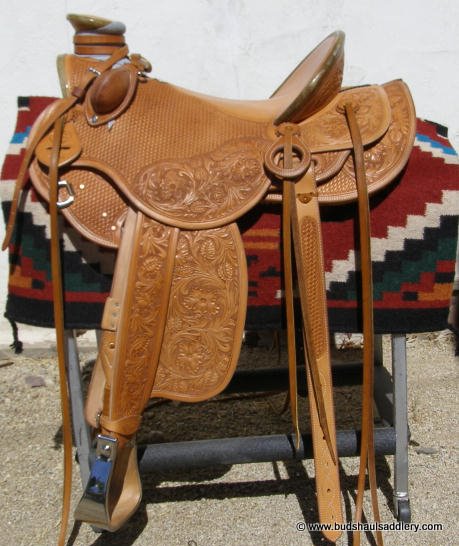
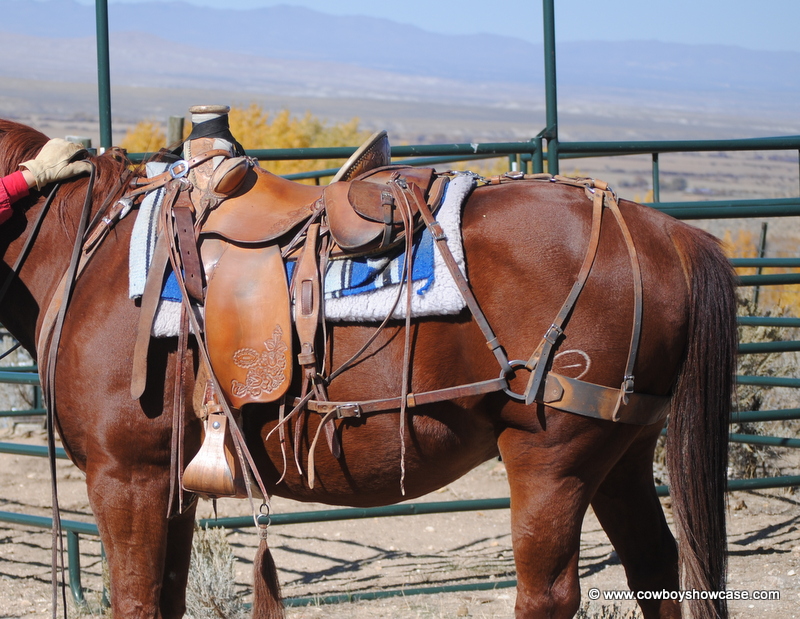
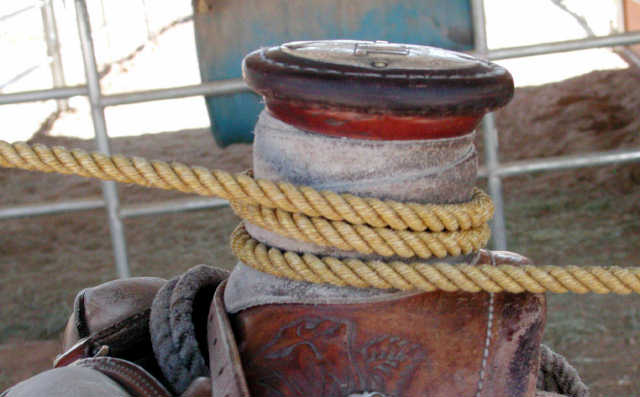
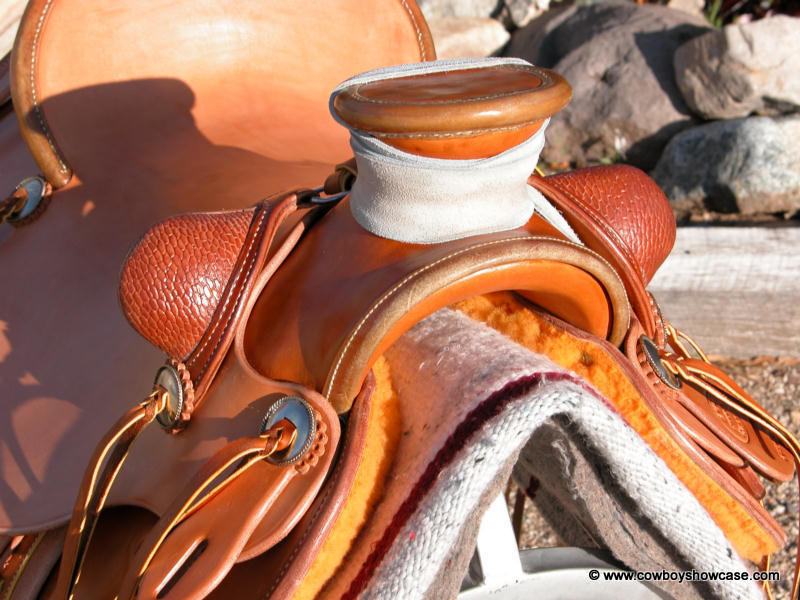
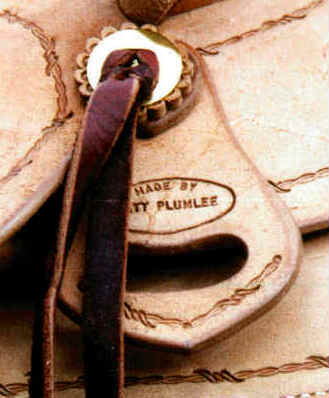
SADDLE: (la silla) (Also called a "wood.") seat type device set on an animal to facilitate riding it. Different styles are used in different parts of the country and for different uses.
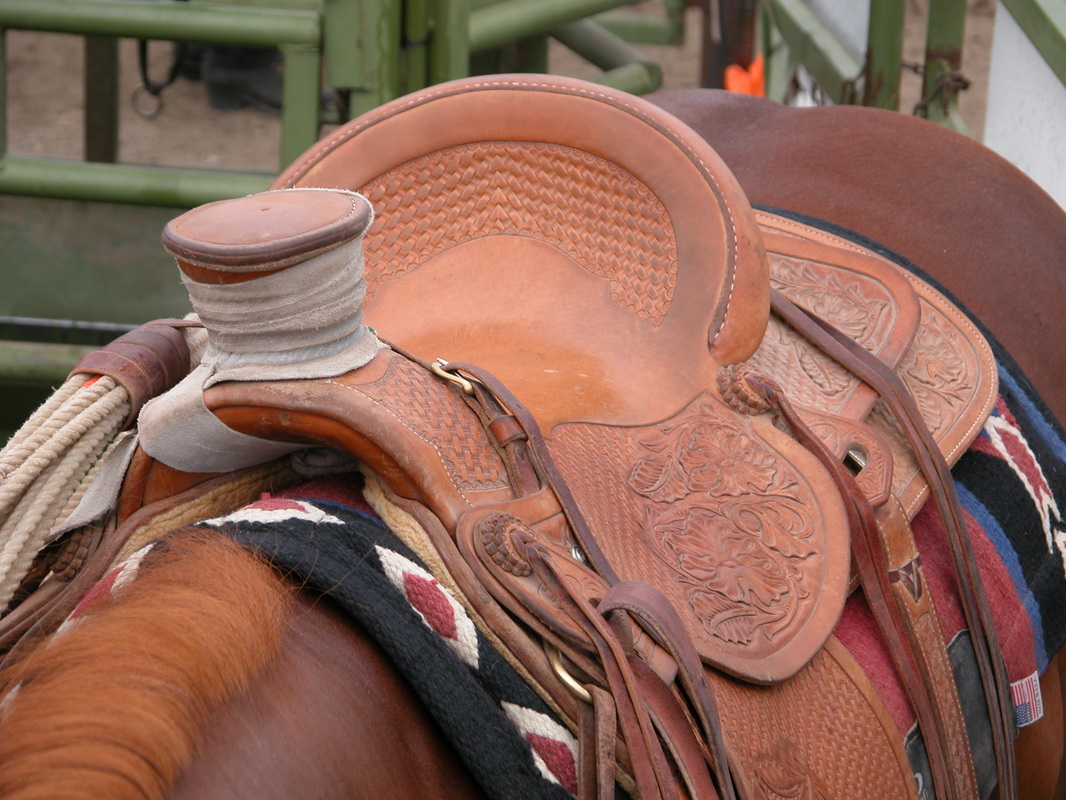
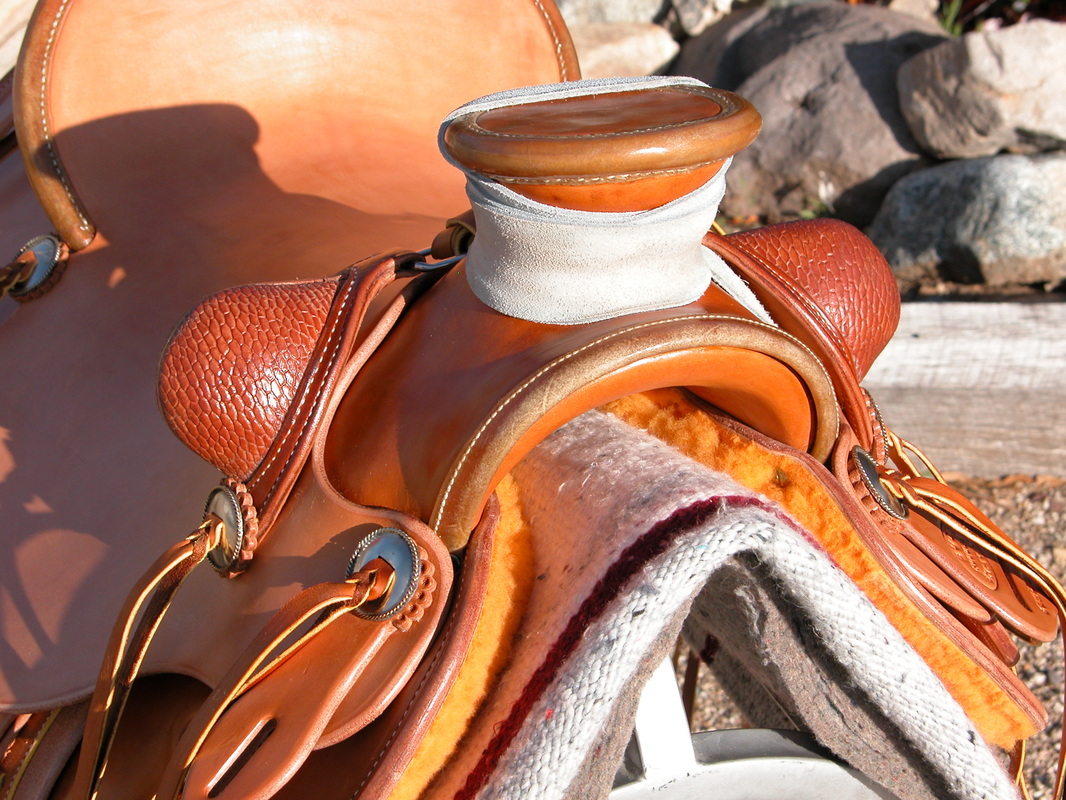
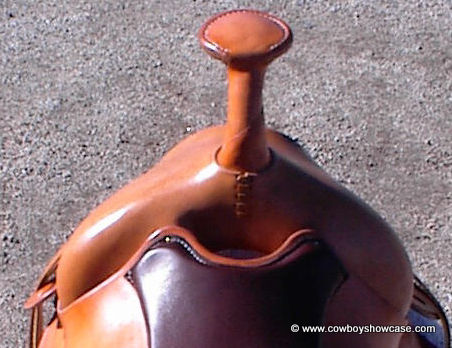
POMMEL: (la campana) forward, arched portion of saddletree.
SWELLS: bulging shoulders of the saddle pommel
FORK: (el fuste) saddletree, bows of saddletree.
GULLET: (el interior del arzon) inside of the pommel or the front edge of the forward arch of the saddle.
SWELLS: bulging shoulders of the saddle pommel
FORK: (el fuste) saddletree, bows of saddletree.
GULLET: (el interior del arzon) inside of the pommel or the front edge of the forward arch of the saddle.
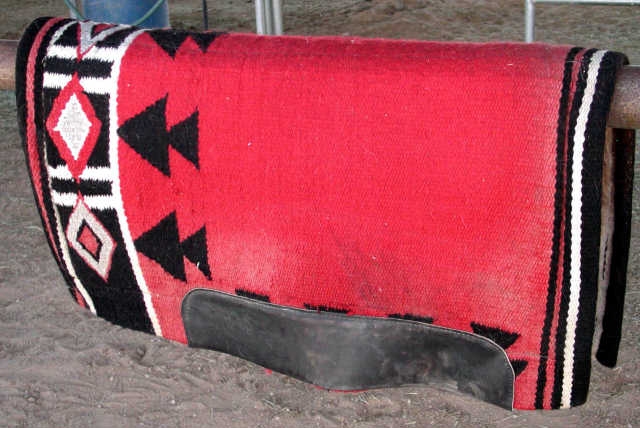
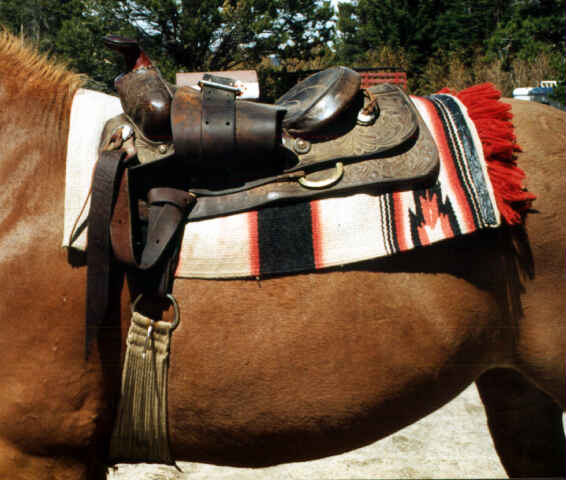
SADDLE BLANKET OR PAD: (el cojin, el baste) heavy blanket or pad placed under the saddle to protect it from dirt and to help conform the saddle to the animal's back.
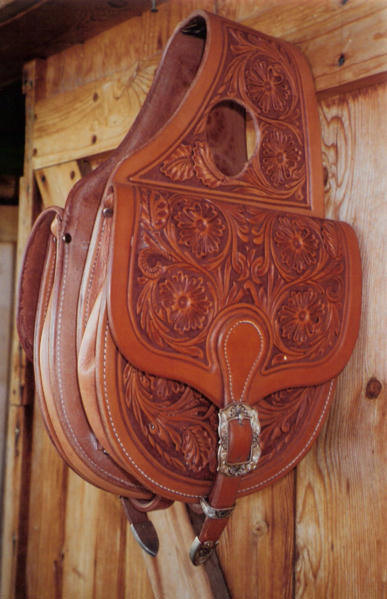
SADDLE BAGS: (las cantinas) (bolsas) large leather or canvas piece with attached pockets, placed over the rear extensions of the saddle to carry extra gear.
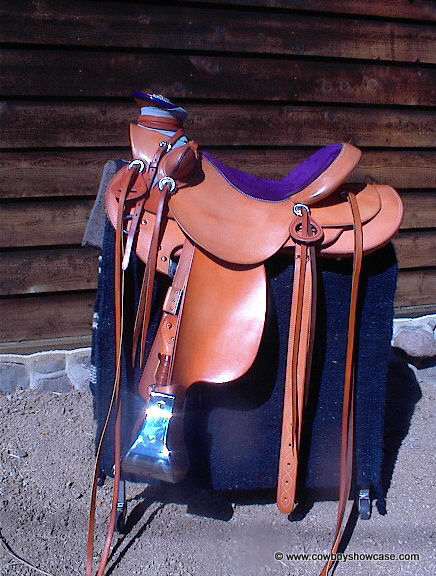
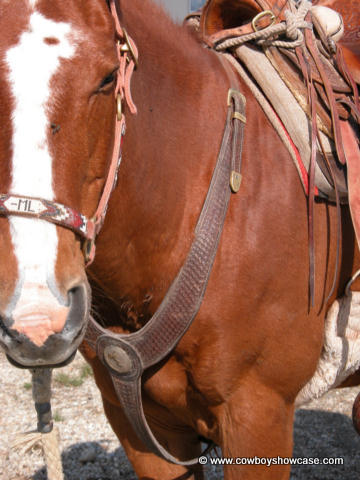
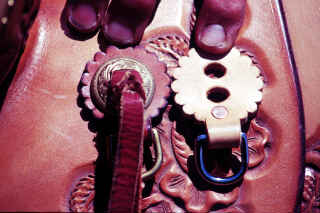
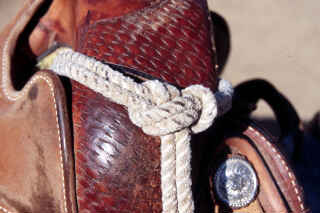
SADDLE STRINGS: (los tientos) narrow strips of tanned leather, usually in pairs, that lace through the saddletree or coverings, and are held on surface by rosettes; the long ends are decorative and also serve to tie on ropes, and other pieces of equipment.
In south Texas, leather strings used to tie stuff like ropes or a bedroll on with, are called 'Latigos'.
In south Texas, leather strings used to tie stuff like ropes or a bedroll on with, are called 'Latigos'.
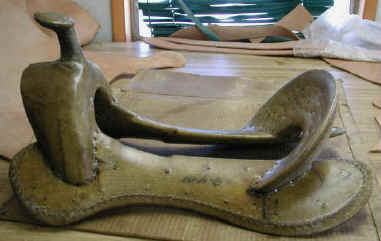
SADDLETREE: (el fuste de silla) framework, often of wood covered with rawhide, consisting of two side-boards connected by two forks for the pommel and cantle; the conformation of these parts gives the saddle its characteristic shape and name. There are many different styles of saddletrees.
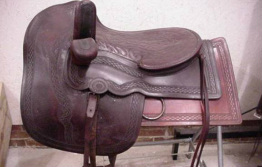
SIDESADDLE: ladies' riding saddle. Women began to ride astride when they needed to do ranch work. The style of riding sidesaddle began to go out of fashion around the turn of the 20th century.
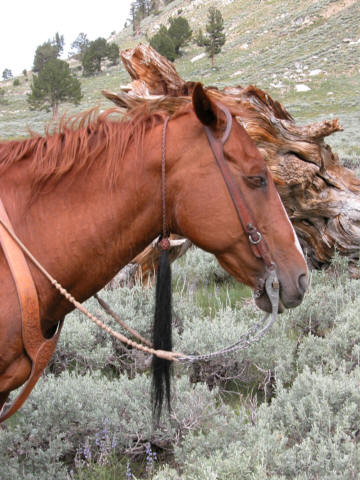
SHOO-FLY: tassel like accessory, often made of horse hair, that swings as the horse moves scaring away flies and other insects. Often attached to the front cinch. Here is another shoo-fly for the throat latch.
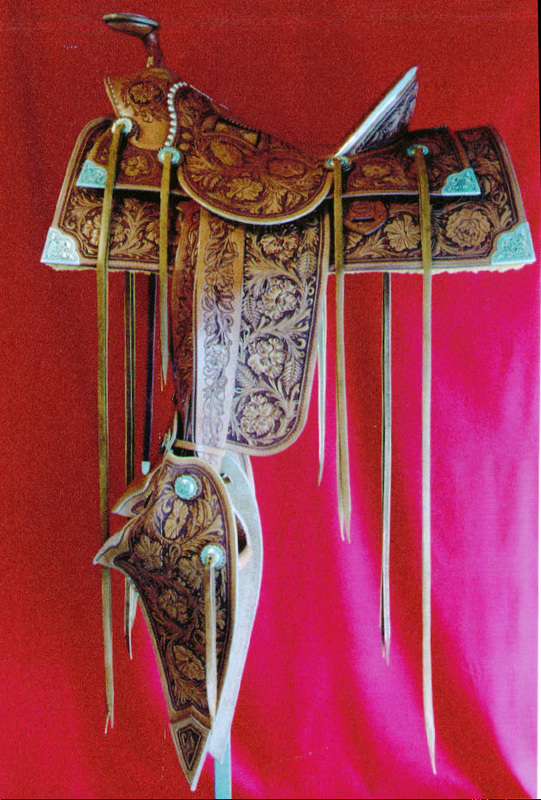
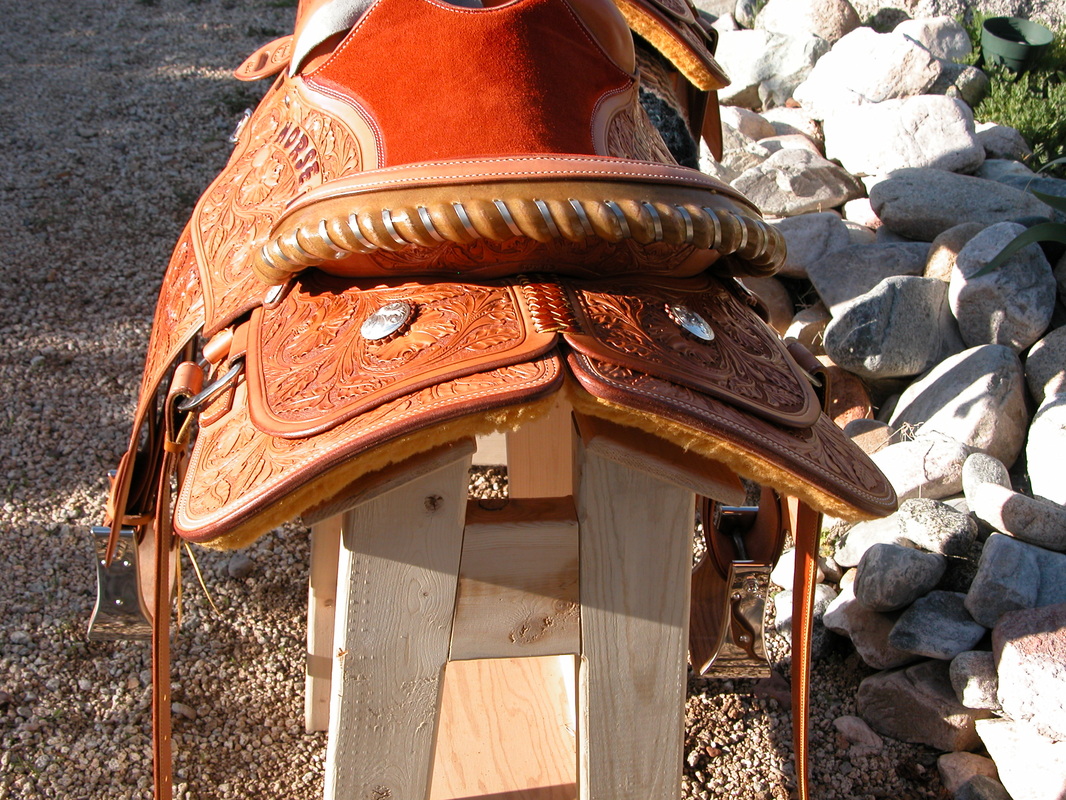
SKIRTS: (las faldas) large leather panels attached to the saddletree, to protect the rigging and give form to the saddle.
The skirts on this saddle are square.
The skirts on this saddle are square.
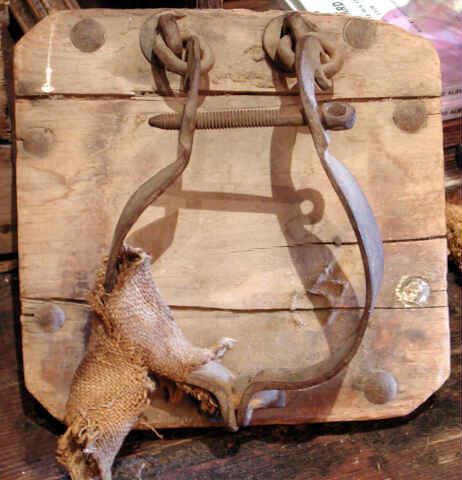
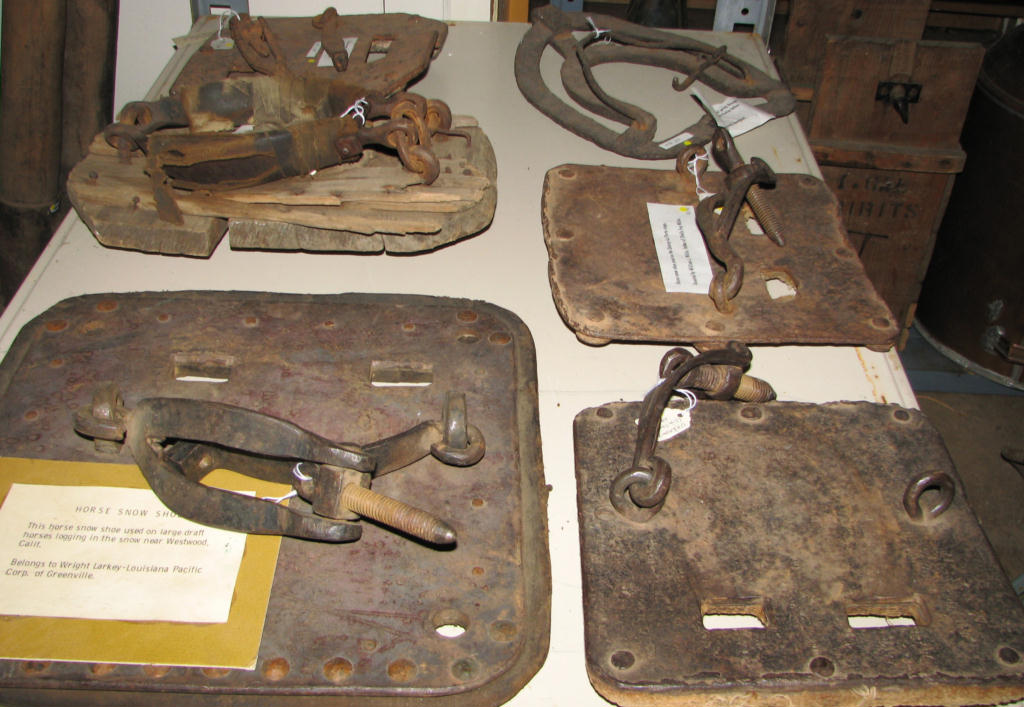
SNOWSHOES for horses. Shod horses will build up snowballs in their hooves making it difficult to impossible to travel. Shoes are usually pulled in areas with heavy snowfall during the winter months. This clamp-on shoe would help that problem. It appears to have been wrapped with burlap for padding against the hoof.
Thanks to Scott J. Lawson, Director
Plumas County Museum http://www.plumasmuseum.org/ for the following additional photos and information on horse snowshoes.
Thanks to Scott J. Lawson, Director
Plumas County Museum http://www.plumasmuseum.org/ for the following additional photos and information on horse snowshoes.
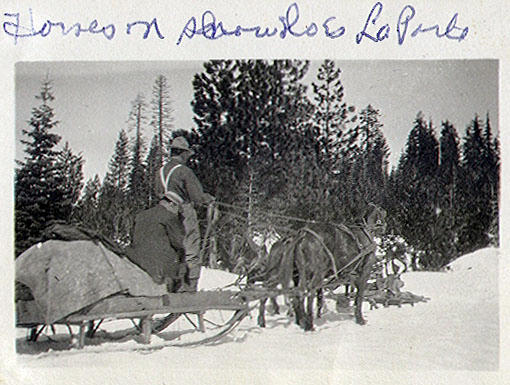
"The reason for them is that the snow in the Sierras gets quite deep, and the horses would "post hole" in the snow. These shoes helped to keep them up near the surface. Normally, colts were started with them to get them used to the odd gait they had to walk. Older horses could be trained, but it was a harder job usually. Also, the horse snowshoe was invented about 1866 at Spanish Ranch in Plumas County, California, about six miles west of Quincy. There are a few folks in NE California who claim the invention came from their area, but we have actual documentation of it happening here. I have attached a photo showing a sleigh with snowshoe equipped horses."
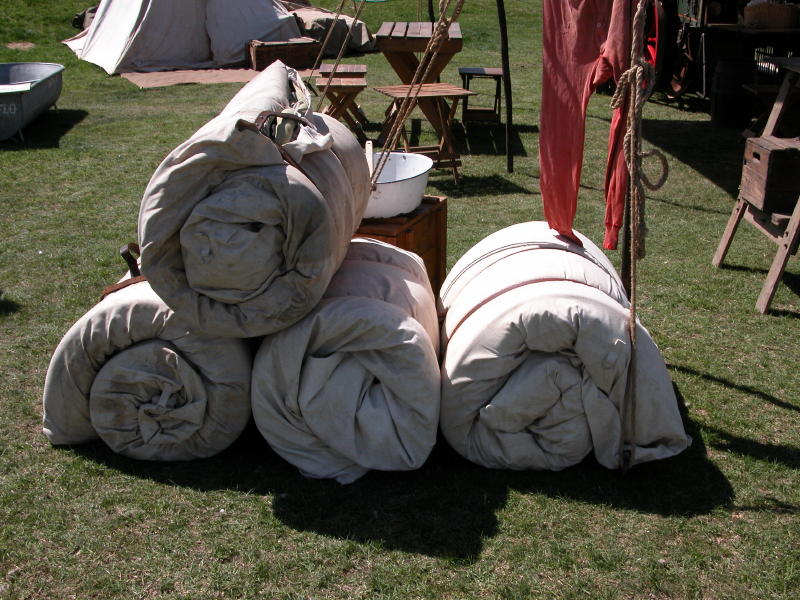
SOOGAN: (also: sougan) Quilt or comforter in a cowboy's bedroll.
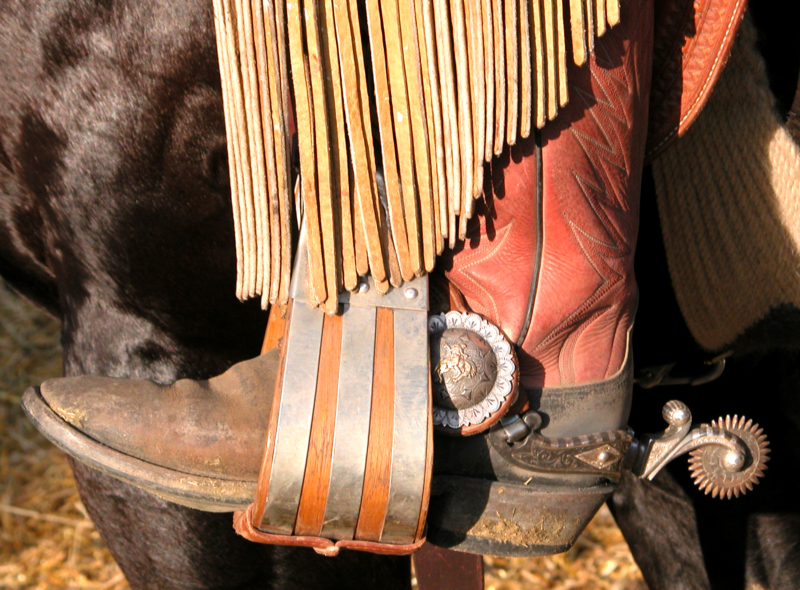
STIRRUP: (el estribo) a device hung from each side of a saddle to receive the rider's foot. Stirrups come in different widths and cowboys prefer different style stirrups for different tasks.
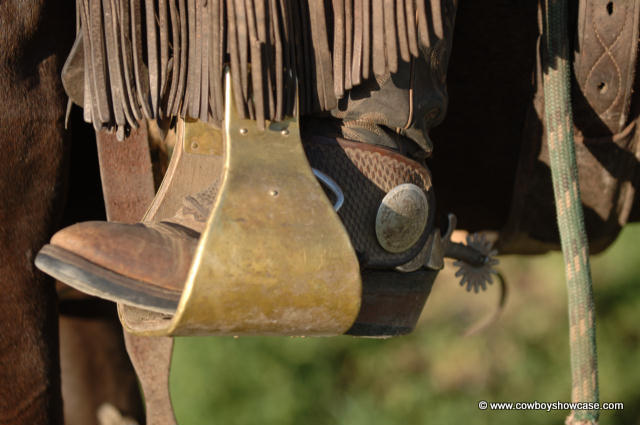
Bell stirrups: Wide stirrups common to the buckaroo country. If you look at them from the side, theyWide stirrups make it easier to "trot out" for a number of miles in the big country. A long trot is the gait of choice for buckaroos that need to travel long distances horseback to reach the place where they will start to work.
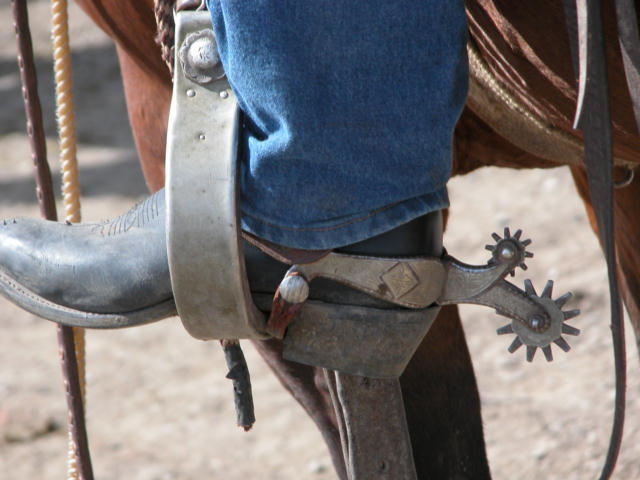
Oxbow stirrups: Narrow stirrups sometimes made of metal and sometimes preferred by bronc riders.
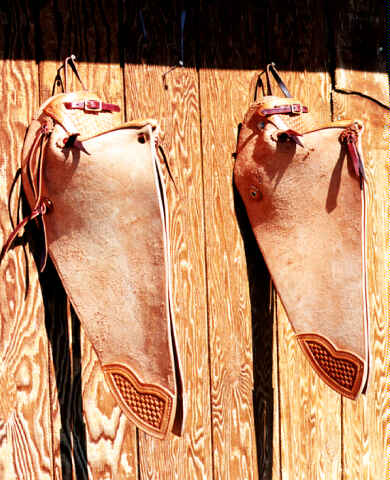
TAPADEROS: also called taps. Stirrup covers to protect rider's feel from brush and weather. They come in different styles.
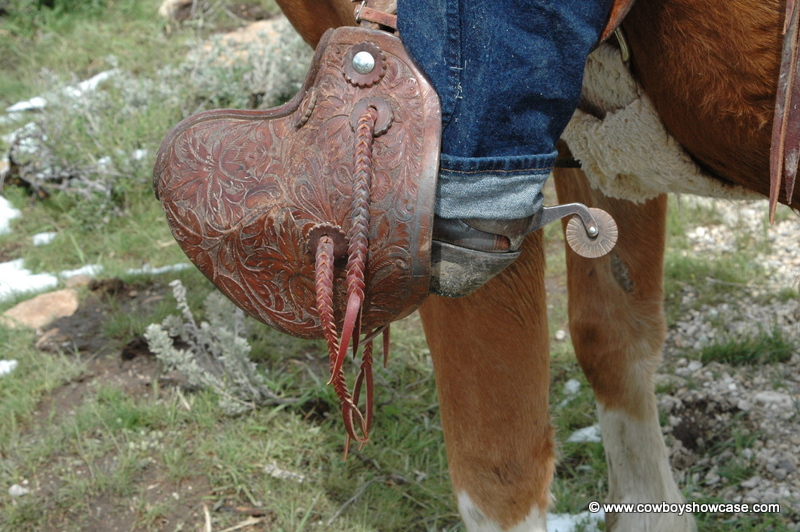
Bulldog taps: Blunt nosed stirrup covers to protect the feet & stirrups.
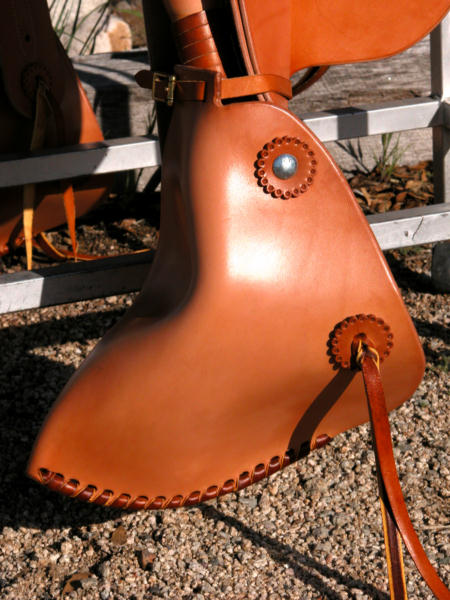
Monkey nose taps: Blunt nosed stirrup covers used strictly to protect the feet & stirrups.
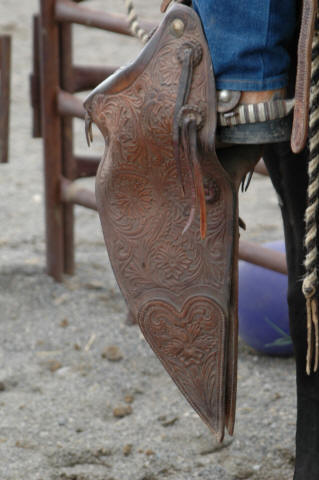
Eagle bill (or eagle beak) taps: Tapaderos with long pieces of leather hanging below the stirrups. When moving cattle, a cowboy can slap the pieces of leather together by wiggling their legs and the noise helps push the cattle.
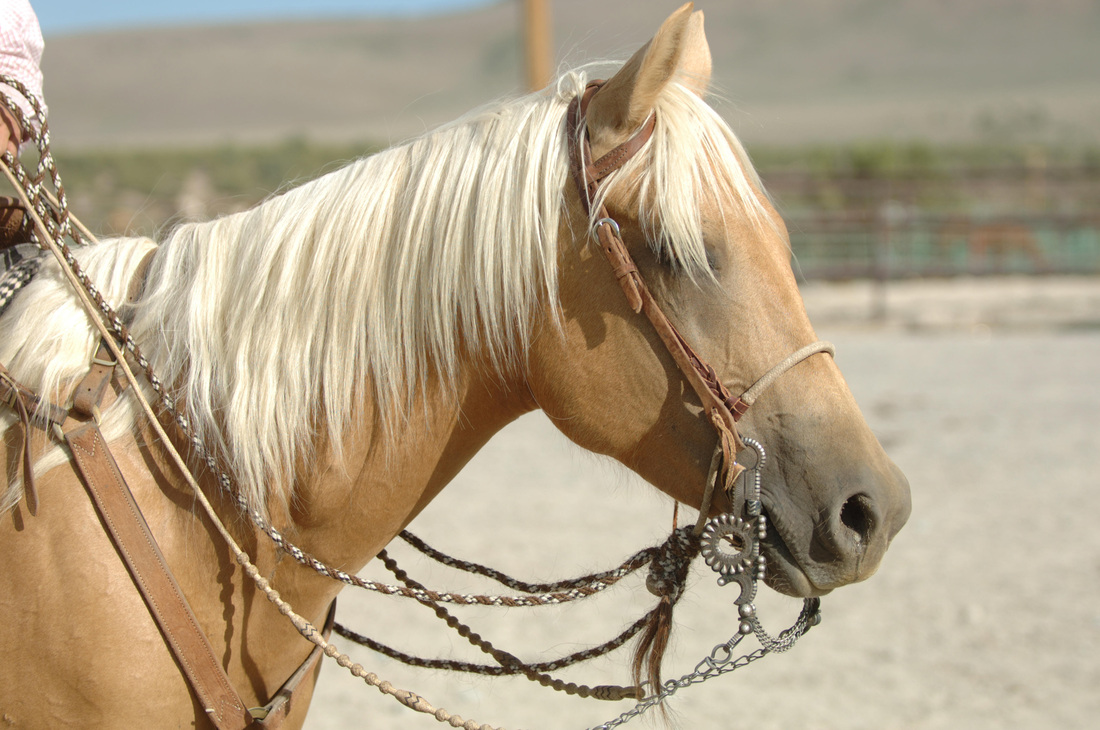
Two-Rein: Bridle and hackamore transitional setup. The horse wears both the bridle and the hackamore and the rider actually uses four reins (two reins on each side) to control the horse.
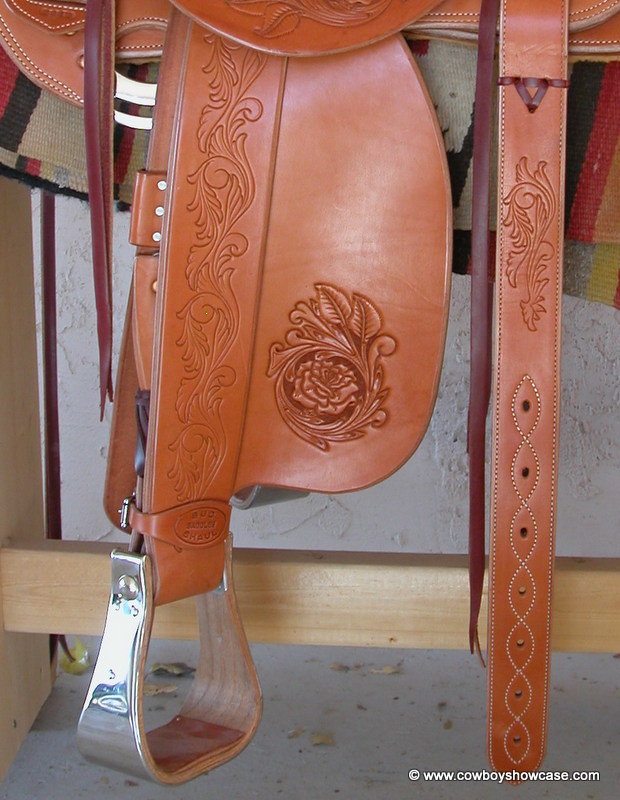
STIRRUP LEATHERS: (los arciones) adjustable straps that suspend the stirrups from the saddletree
FENDER: (el alero) leather piece projecting back from stirrup leather to protect the rider's legs. In south Texas, they use the term 'Sweat leather.'
FENDER: (el alero) leather piece projecting back from stirrup leather to protect the rider's legs. In south Texas, they use the term 'Sweat leather.'
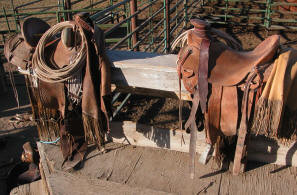
WOOD: Another term for "saddle"

