Cowboy Personal GearAny particular cowboy's gear becomes a rich tapestry of his or her own making. This style boot, that style hat, big spurs, small spurs, lots of silver...it can go on indefinitely...and then they begin to trade...this set of silver conchos for that headstall...
Much of the style dress and many of the terms used in reference to cowboys, horses, their tack, and the things they do are regional, changing depending on where you come from. Many of the words are derived from Spanish. You may search for a particular term or browse through the terms and explanations for a cowboy's clothing and personal gear. 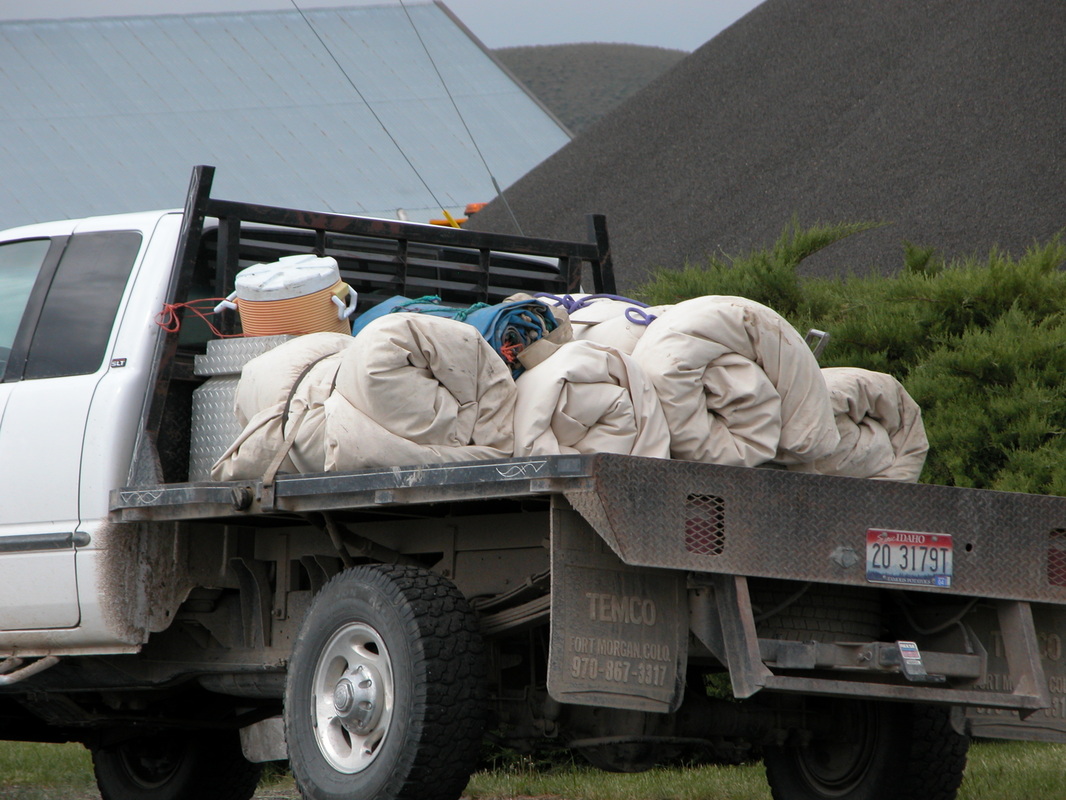
BEDROLL: blankets rolled and carried for sleeping. Also called sugans, soogans, hot rolls, or dream sacks.
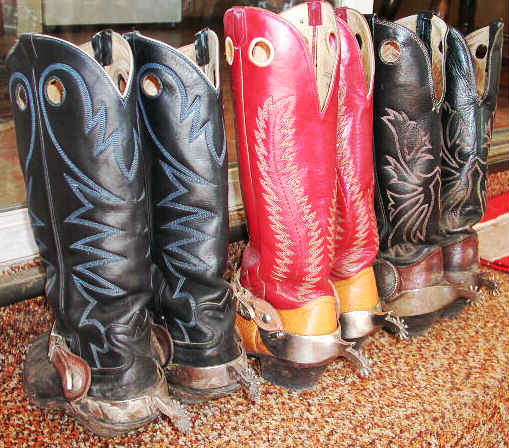
COWBOY BOOTS: High topped boots made with high heels to keep them from slipping through saddle stirrups and as a brace in roping. Soles are usually slick leather to keep them from catching when dismounting. Styles are often regional and defined by function.
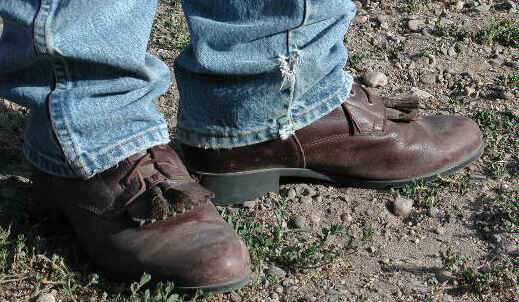
Roper boots with flat heels are used especially in arenas and for walking.
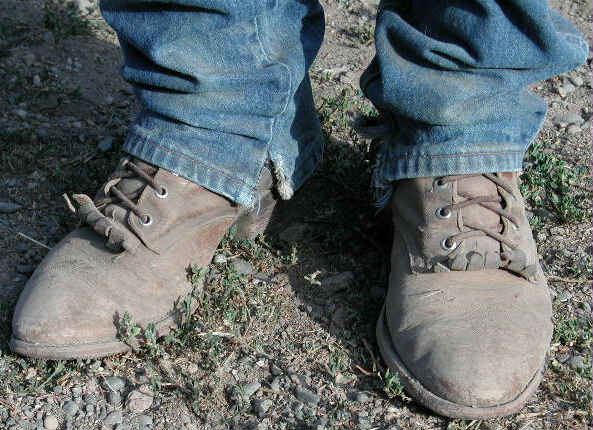
Packer boots are laced and generally made of heavier leather for cold weather, hiking, and hard riding.
CHAPS: (pronounced "shaps") Derived from the Spanish las chaparreras, or chaparejos. Leggings worn by horse people as protection against the brush and weather. Usually made of leather.
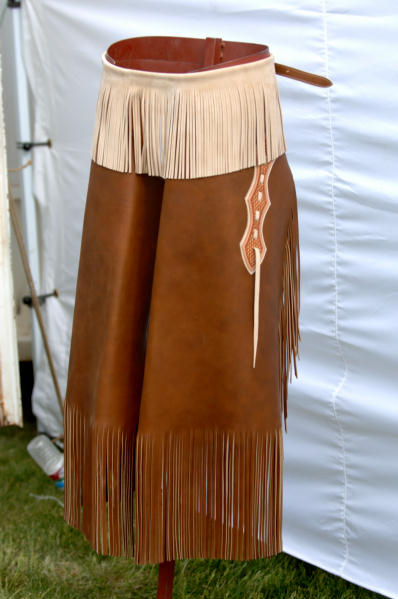
(Armitas): A California, Spanish named, version of leggings, similar to chinks, but made by hand, usually without metal hardware.
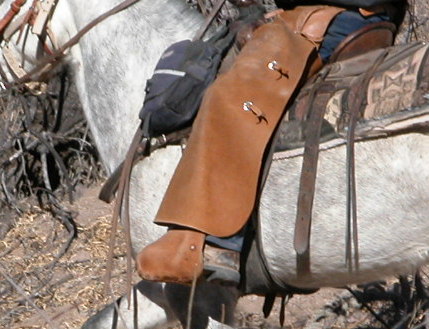
(Batwings): Long chaps with big flaps of leather. They usually fasten with rings and snaps. Like the chaps rodeo rough stock cowboys wear.
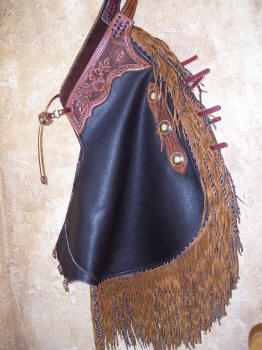
(Chinks): Short chaps or riding apron, originally from California. Usually with fringe, they come just below the knee. Regional to buckaroos. Texas and southwestern cowboys sometimes wear chinks with their pants tucked into high boots.
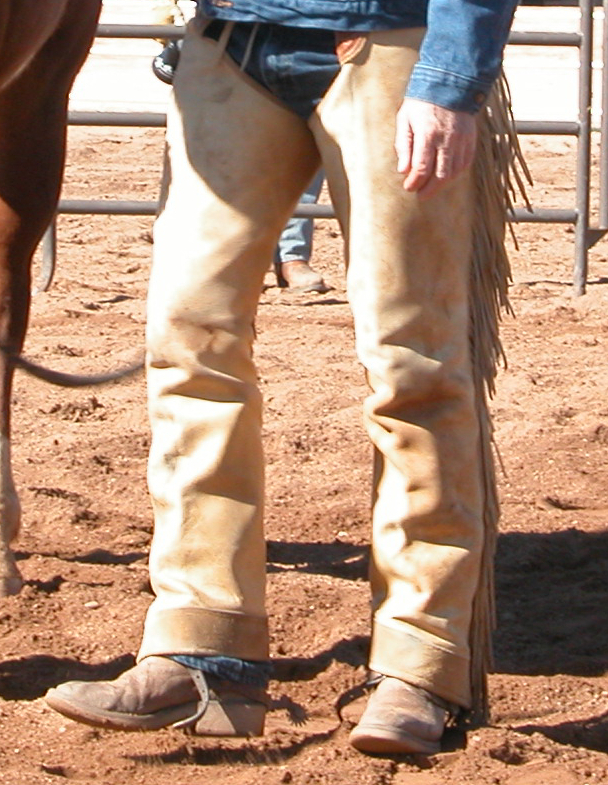
(Shotgun chaps): Tight legged chaps. Can be pulled on as trousers, having no snaps and rings. Often, however, they have full length zippers.
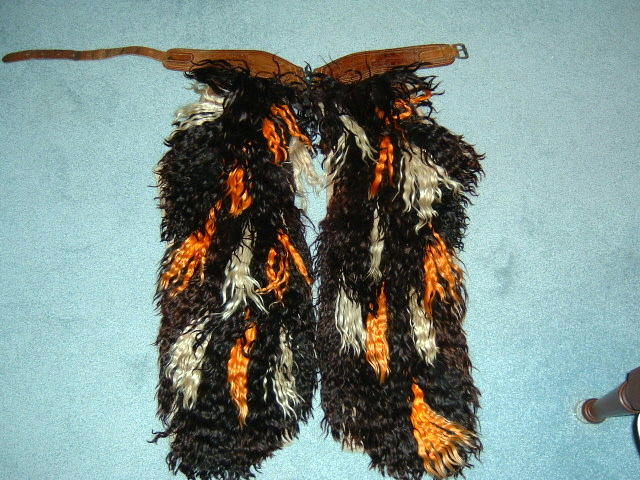
(Angora chaps): Covered with long Angora goat hair. Used up in Wyoming and Montana and open prairie country as a protection from the cold. Also called "woolies".
Tri-color wooly chaps made by Power, Pendleton, Oregon. 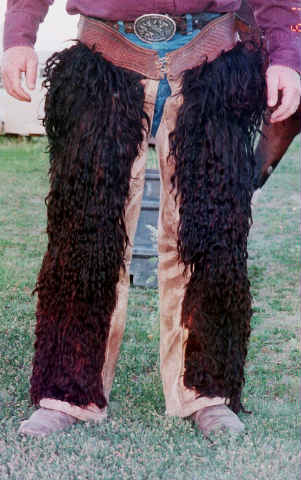
These wooly chaps belong to Amy Carman of Kansas. They originally belonged to her grandmother Margaret Monroe Fulk of Cave Junction, Oregon.
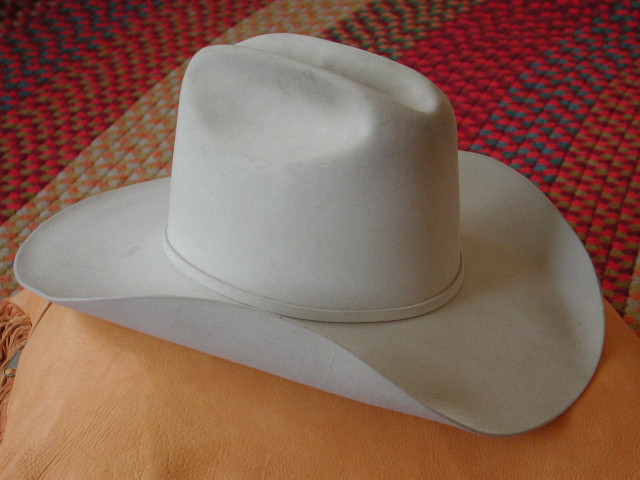
COWBOY HAT: A cowboy's hat, usually with a four to six-inch brim, acts as an umbrella in stormy weather, and a shade from the sun in hot weather. Hats and their shapes are very regional. You can tell where a working cowboy is from by the crease in their hat. John B. Stetson is credited with designing and marketing the first true cowboy hat, which he called the "Boss of the Plains."
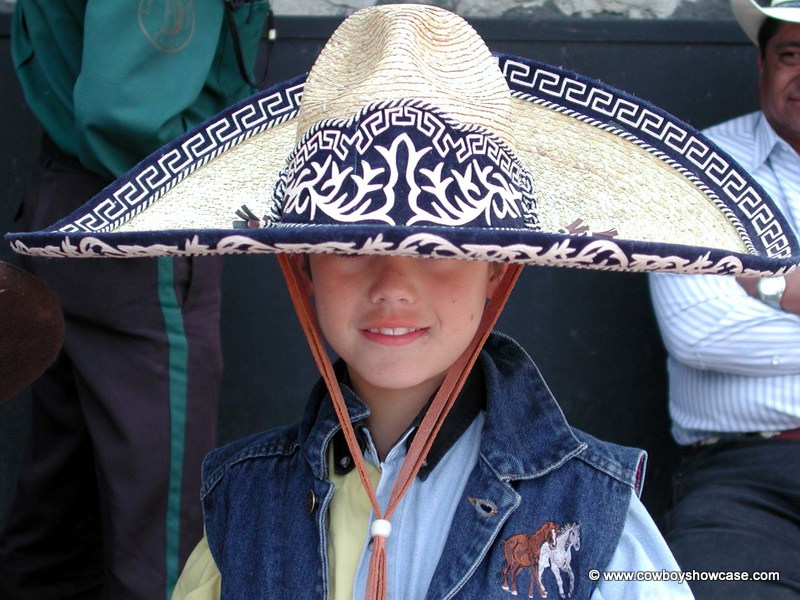
SOMBRERO: Spanish term for a broad brimmed hat, from the Spanish word "sombra" meaning shade.
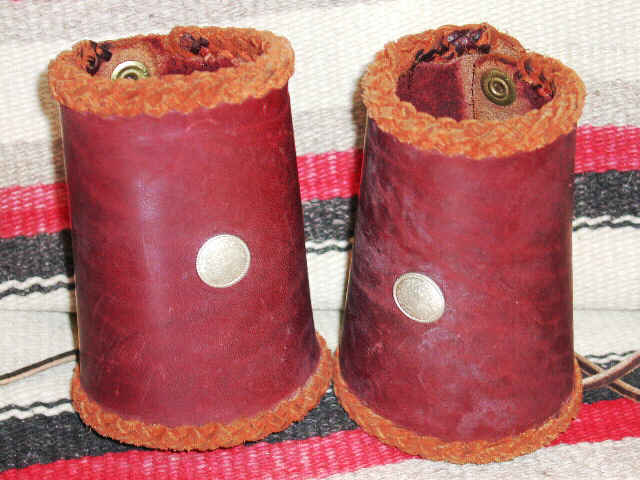
CUFFS: Leather wrist cuffs used for protection against brush, to protect your shirt sleeves from wear, and to keep a rope from fouling in your shirt sleeves.
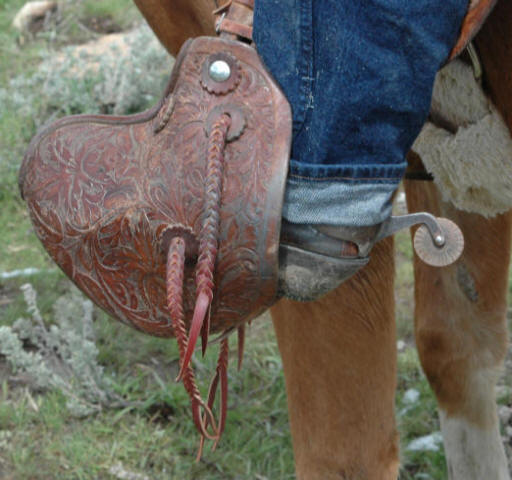
Four-horse roll: the old-style way of turning up the cuffs on your Levis about 4 inches. This was said to also be useful for depositing the ashes of cigarettes if you were in a house, before ashtrays were common.
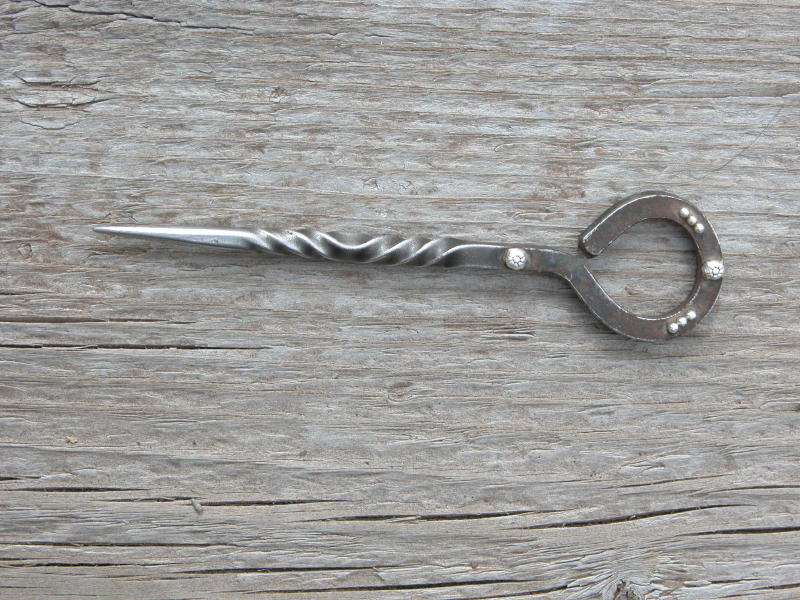
Marlin Spike: More properly known as a nautical term. This silver-mounted spike belongs to buckaroo Dan Locke of Lodi, CA. A friend made it for Dan and he packs it behind the cantle of his saddle. It comes in handy for punching holes and unlacing leather among other things
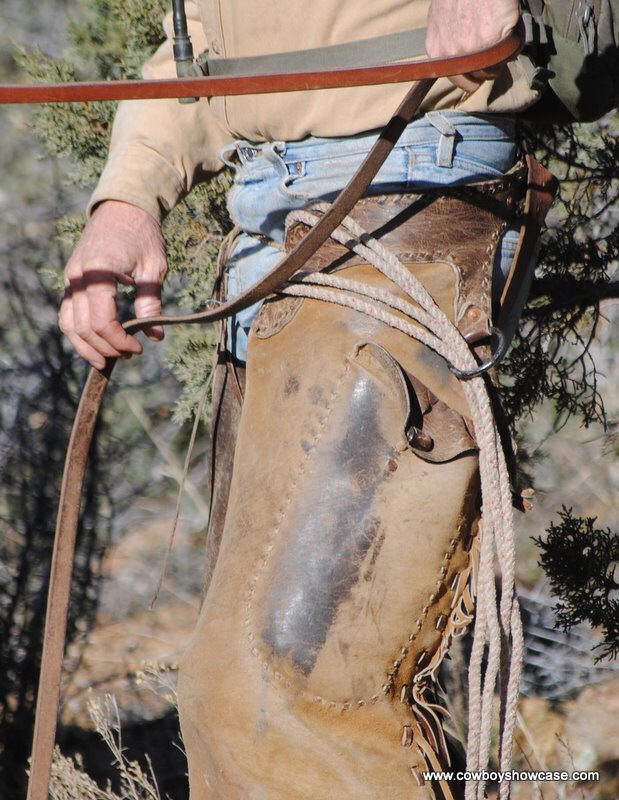
Pigging string or piggin' string: Short piece of rope cowboys carry on their saddle or chaps. In Texas they call this rope a "hoggin' string". In British Columbia, Canada they call it a "short line." In the SW they call it a "tie down rope" and in the Great Basin they call it a "piggin string."
Note that it is related to the term "hog tie" meaning to tie both back legs and one front leg of an animal together securely so they can't get up. Or in common usage, tie up anything tightly and securely.See Cowboy Piggin' String 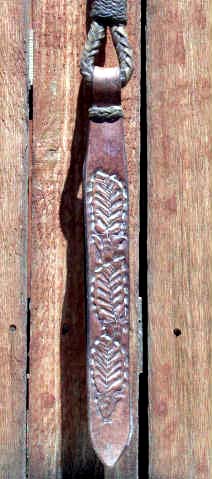
Popper: Leather pieces attached to the end of reins, romal, or quirt that make a popping noise when slapped on your chaps.
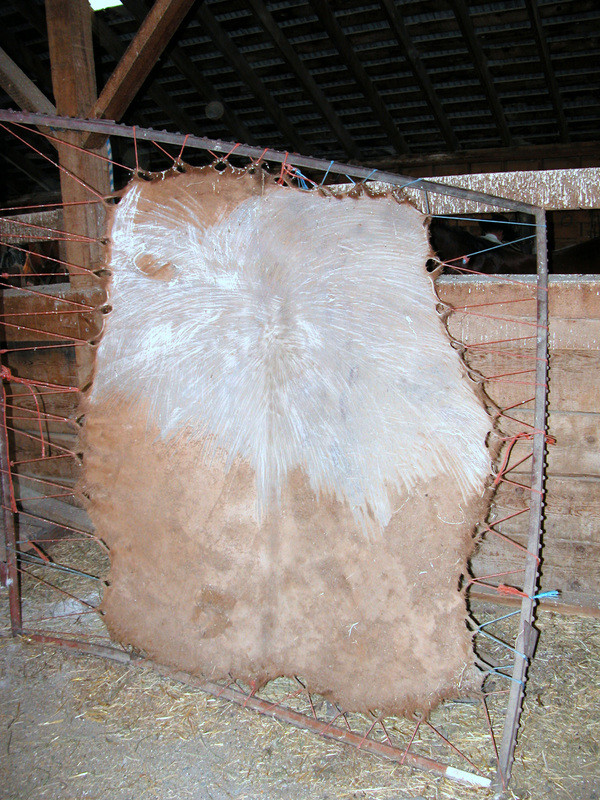
Rawhide: unprocessed hide used to make tack. Often cut in long thin strips and braided.
ROPES:The following information was submitted by a reader for your use: "The word La Riata (or reata in English) refers to a rope made from hide, be it bovine or equine hide. The word La Soga refers to a rope made from plant matter such as grass or cotton and is now days used to refer to ropes made of nylon and poly. La Soga is where we get the English term Lasso. In modern day California they call a pencil bosal a bosalito, but in old Mexico the correct term is Bosalia meaning it is the smaller more feminine counter part to the larger more masculine Bosal..." 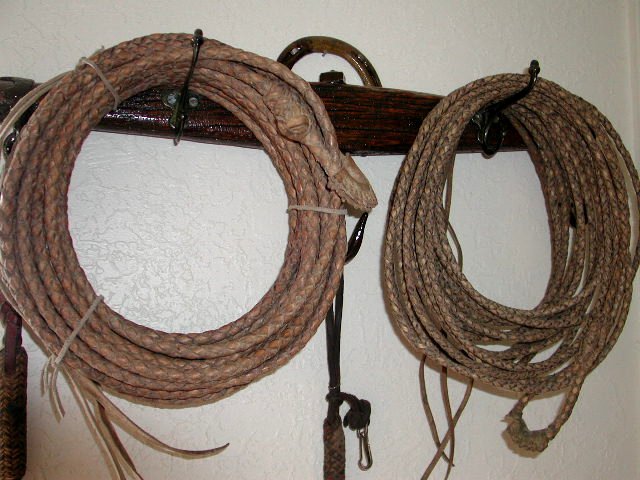
LARIAT: (el lazo) (derived from Spanish "la reata" meaning to catch or fasten.)
A long rope (also called "lasso" or "reata"), of braided rawhide, hemp, or today of polyester or nylon. The rope has a loop or eye attached at one end (honda or hondo) through which the other end runs. Note the different style hondas in the photo. Also know as a lash rope, string, or catch rope. 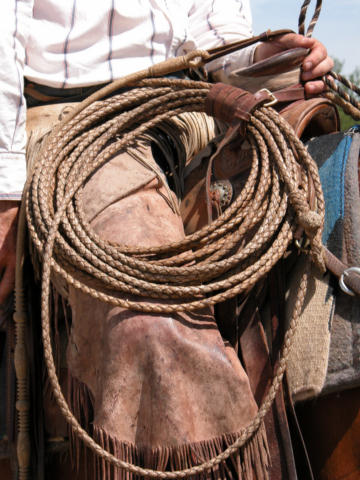
REATA (or sometimes spelled riata): braided or twisted rawhide rope.
"Skin-string" A reata can be different stiffnesses (called in roping circles: lays) depending on what type of rawhide is used. For instance, bull hide makes a very stiff rope for heel roping. The Mexican way to treat a reata, to keep it supple, is to tie it between two trees, rub it first with lemon juice (cut a fresh lemon in two and rub the fruit along the length) and then rub it with beef fat (suet). This keeps the leather from drying out or becoming stiff. Artificial products will make the reata too limber. 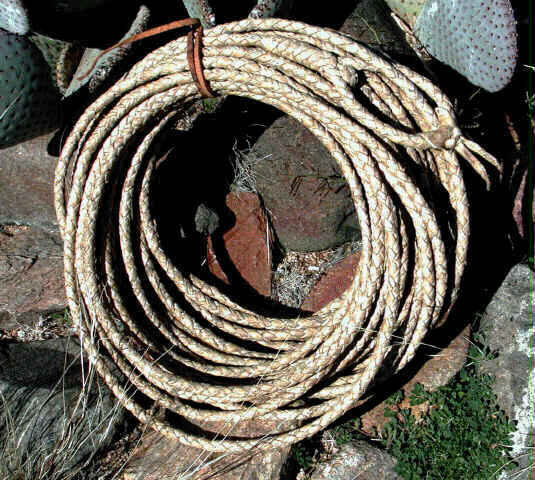
This pictured reata is an 80 foot reata "especial por los charros de Jalisco, Mexico." It is worth clicking on the thumbnail to view the larger picture.
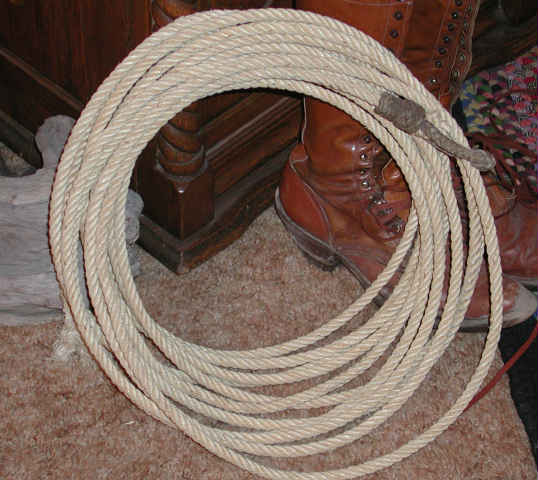
MAGUEY: Mexican style "grass" rope made of agave fiber. The word "maguey" means "agave" in Spanish.
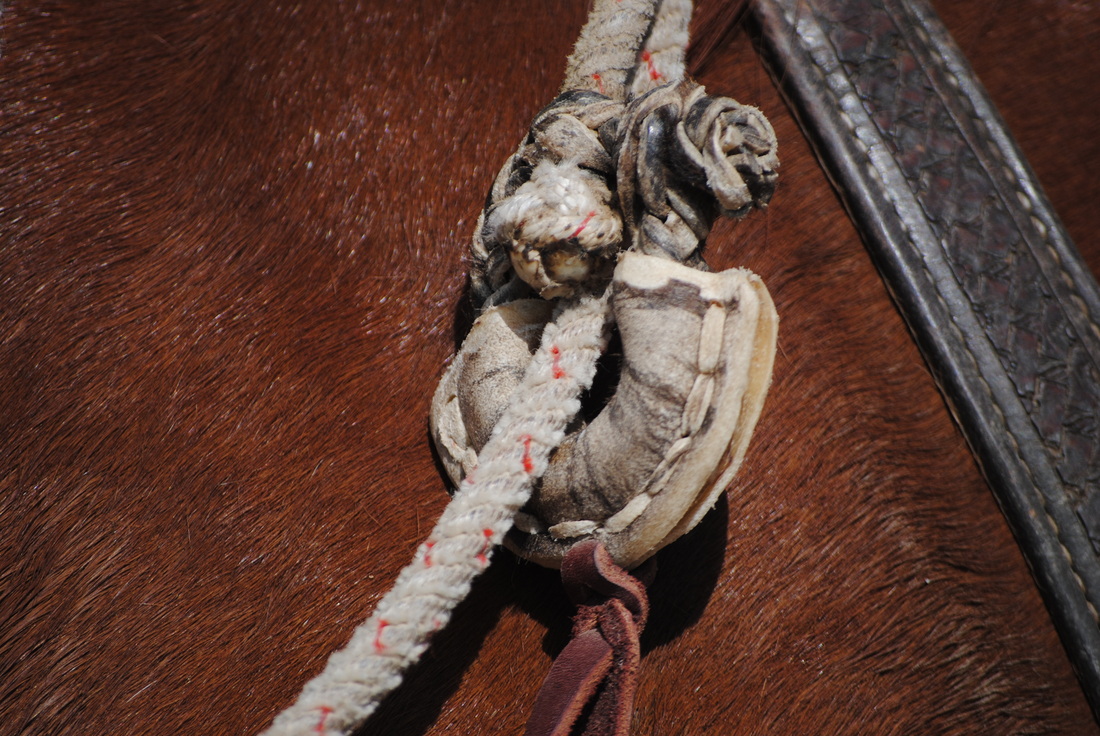
Honda (or hondo): a metal, rope, or rawhide ring, through which a rope slides to make a loop. Several styles are available depending on the usage.
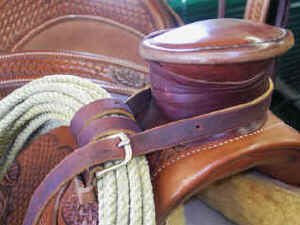
Rope Strap: A strap, usually of leather and fitted with a buckle, attached to the pommel of a saddle used for attaching a catch rope.
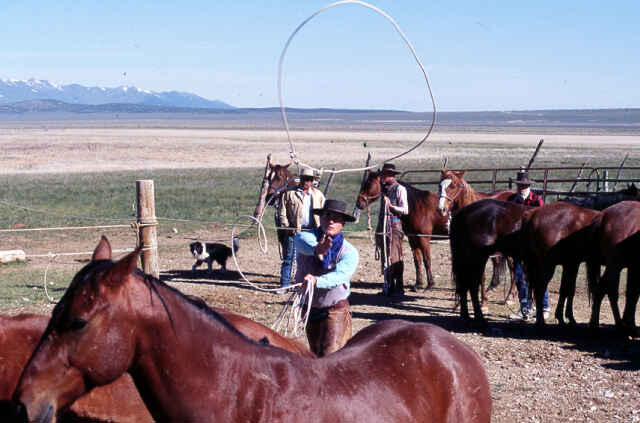
Hoolihan: A style of loop used when throwing a rope: a loop thrwn over the head with the wrist turned backwards often used for roping horses because the rope is not swung before it is released, so it does not excite the animals.
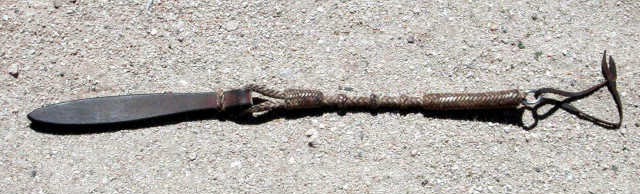
QUIRT: (la cuarta) Short, leather strap or braided whip, often attached to a handle, used as a whip to encourage a horse to increase speed. A loop is usually attached to the hand end so that it can be carried on the rider's wrist or over the saddle horn.
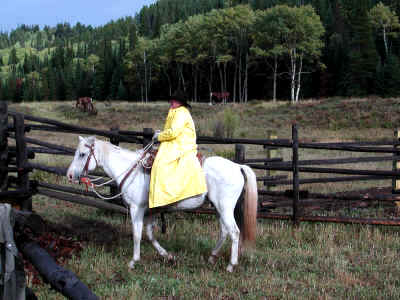
SLICKER: (pommel slicker) Waterproof long coat designed to protect rider and saddle from rain or snow.
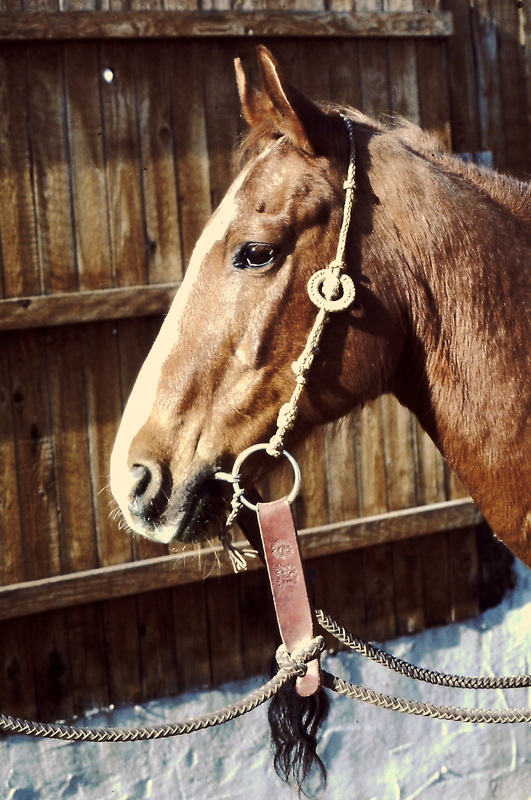
Slobber Leather: large leather pieces to attach the reins to a snaffle bit.
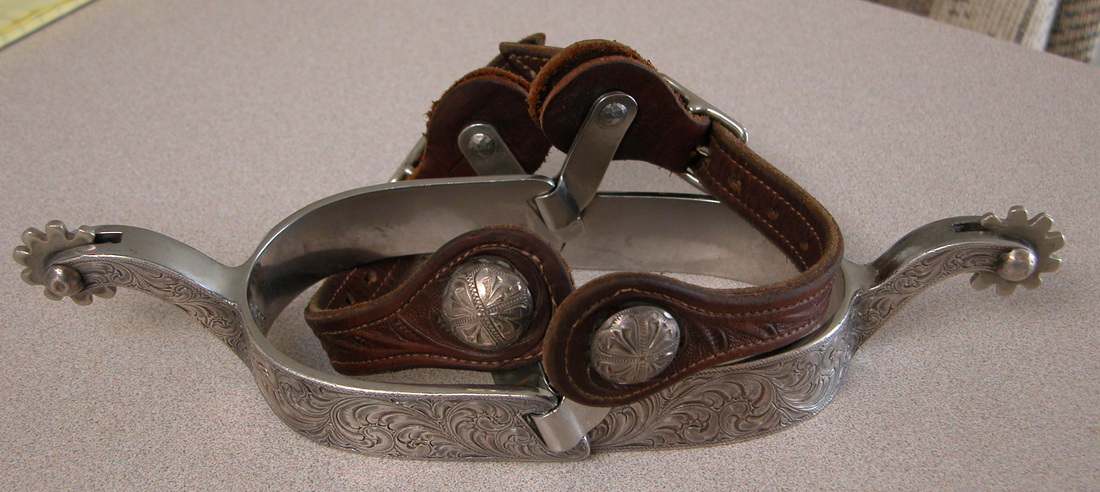
SPUR: (la espuela) U-shaped device attached to rider's heel to encourage a horse to greater speed or to pay attention. See our pages on Spurs.
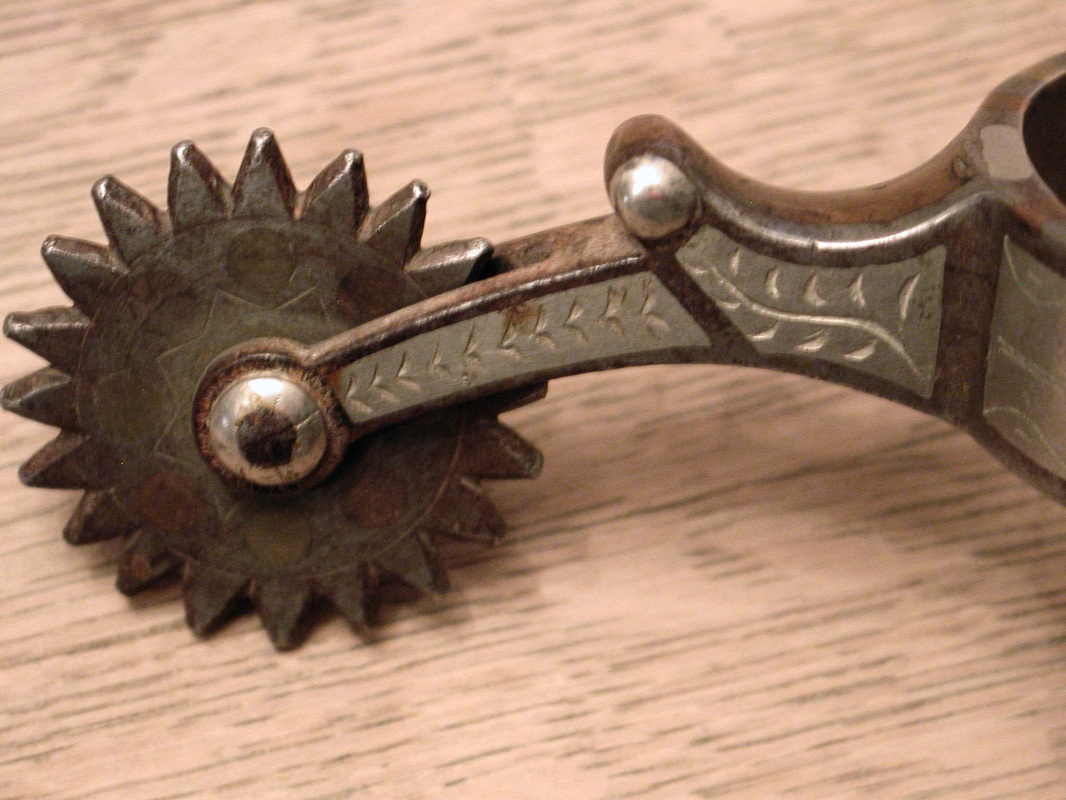
CHAP GUARD: Small upswept metal projection on top of the spur shank of some spurs that supposedly helps keep a cowboy's chaps from fouling in the rowel. Not all spurs have chap guards.
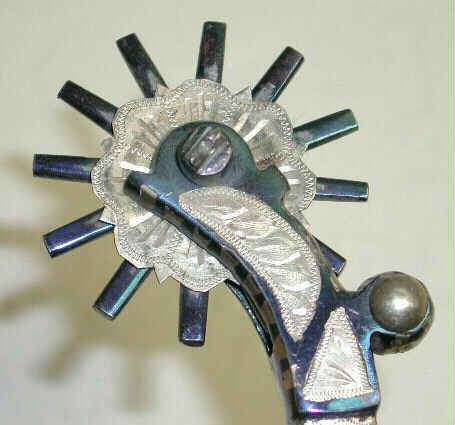
ROWEL: (la rodaja or la estrella) the disk or star set in the end of the spur's shaft or post, which turns as the rider's heel touches the horse's sides.
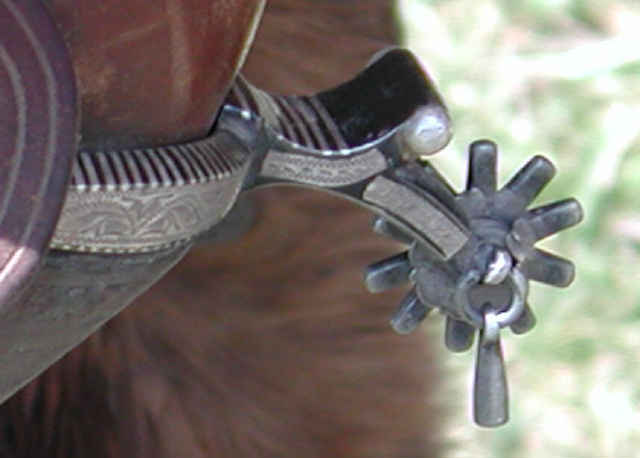
JINGLE BOBS: the metal pieces dangling from the rowel that make a bell-like ringing when the spurs move, either while walking or riding. The jingle bobs offer decoration and it is said their jingling helps keep the horse calmer. Tradition has it that a bell's noise makes a horse walk faster.
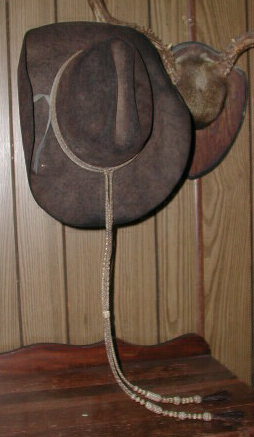
STAMPEDE STRING: A long leather string run half way round crown of a hat then through a hole on each side and ends knotted, placed under chin or around back of head which keeps hat in place in windy weather or when riding an active horse.
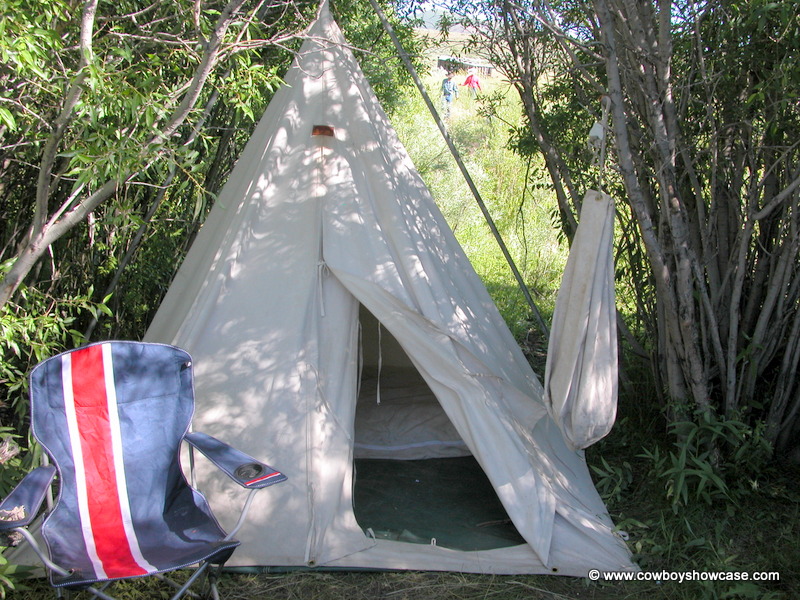
TEEPEE: Small canvas tent used by cowboys when camped out on the range. Became common during the 1880s and still in use today. Also called range teepee or teepee tent.
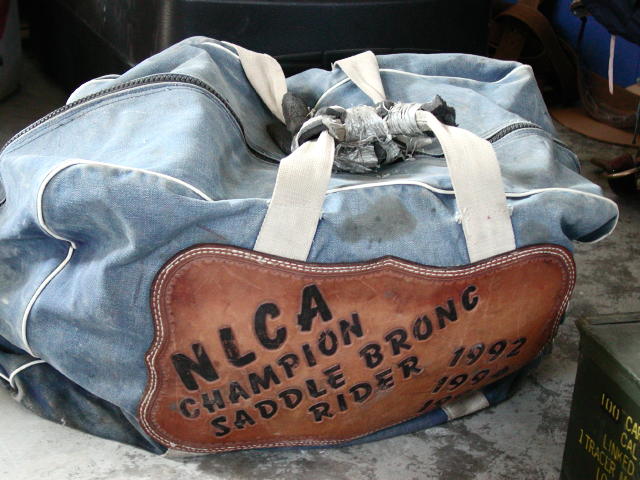
WAR BAG: Canvas sack or bag containing personal items or gear. Also "Possible Bag"
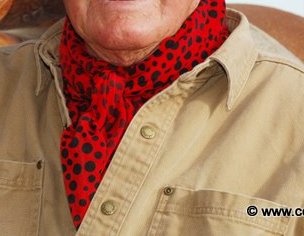
WILD RAG: (mascada) Kerchief or scarf worn at the neck, sometimes elaborately knotted. An authentic wild rag is usually large (36-48" square) and most often made of silk. Wild rags are used for warmth in the winter.
See our article on the buckaroo scarf knot. |
|
- Home
-
Gear
-
Arts
-
Horses
- Diamond Z English Shire Horses
- 5 Tips for Traveling
- Harnessing A Team
- The Dameles and the Curly Horse
- Rounding Up Wild Horses
- Extreme Horse Camping
- First Pull on the Latigo
- Twister Heller Starts a Colt
- Cowboy Martingale
- Cowboy Training Halter
- Cowboy & Colt Clinic
- Using the McCarty
- Teach a Horse to Stand
- Cowboy Draw Reins
- War Knots >
- Tail Knot for Pack Horses
- Cavvy Marks
- Deworming Your Horse
- Safe Fall Trail Riding
- Horse Remedies
- Hormone Implant
- How to buy a mule
- Brands
- Chuckwagon
-
Articles
- Grubbing Hoe Ranch
- Trevor and Emily Fuhriman
- Land of Extremes
- Jersey Valley Cattle Co
- Diamond Tail Ranch
- Gang Ranch of British Columbia
- TS Ranch of Nevada
- When the TS Ran a Wagon
- IL Ranch
- Basque Ranching
- Crystal Rose Cow Dog College
- Wyoming Honor Farm Inmate/Wild-Horse Program
- Cowboy Etiquette
- Arizona Trigger
- Longhorn Cattle
-
Stories
- For the Love of a Horse
- Breakheart Station Master
- Freighters Outbound
- DK Cowboy Stories: A Prophet With Antlers
- Ben's Trail
- Spendin’ Time at Cow Camps
- Slewfoot The Black Bear
- Orphan Boy
- Mooney's Stories - The Circle A Ranch of Nevada >
- Wild Horse Casey >
- Hero Cattle Dogs
- Ranching Traditions
- Life Lessons
- Dave’s Summer Adventure
- Fire-Proofing the Range
- Cowboy Superstitions
- Cowboy Humor
- Portrait of a Cowboy >
- Tons of Silver
- History
- Cowboy Profiles
- Glossary
- Cowboys of the World

|
|
Search Cowboy Showcase
|

Cowboy Showcase e-mail
Web site design by Lee Raine
Photos by Lee Raine unless otherwise noted.
Copyright © 2000-2024 by Lee Raine. All rights reserved.
External links are listed as a convenience. We take no responsibility and give no guarantees or warranties, implied or otherwise, for content or accuracy of third-party sites. External sites are not necessarily endorsed by Cowboy Showcase.
Web site design by Lee Raine
Photos by Lee Raine unless otherwise noted.
Copyright © 2000-2024 by Lee Raine. All rights reserved.
External links are listed as a convenience. We take no responsibility and give no guarantees or warranties, implied or otherwise, for content or accuracy of third-party sites. External sites are not necessarily endorsed by Cowboy Showcase.